12 bewährte Wege, Sora 2 für Werbung, Social & Storytelling einzusetzen
Wenn du die Short‑Form‑Video‑Szene 2025 beobachtest, fällt eines auf: Gewinner schreiben nicht längere Prompts, sondern bessere Shots. Mit Sora 2 und seinem shot‑basierten Workflow verpacken Teams Ideen in Mikroszenen, nutzen präzisere Kamerasprache und schneiden im Takt der Musik. Dieser Leitfaden bündelt 12 praxiserprobte Playstyles samt Prompt‑Skeletons – für mehr Watch‑through, klarere Markenwirkung und bessere Conversions.
Direkt testen? Auf dieser Plattform kannst du sora 2 nutzen und Workflows ausprobieren.
Warum Sora 2 bei Creators zündet
- Szenenfeinheit: 2–5‑Sekunden‑Shots geben dir Kontrolle über Komposition und Bewegung, weniger Flackern/Drift.
- Kamerasprache: Tracking, Push‑in oder Rack Focus führen zu kohärenteren Bewegungen als „cinematic“ im Allgemeinen.
- Audio‑Bewusstsein: Beat‑Schnitte + Ambience lassen Clips „geschnitten“ wirken.
- Timeboxing: 15s/25s passen ideal für Hook, Proof, CTA.
1) 25‑Sek‑Vertical‑Ad (Hook → Proof → CTA)
Einsatz: Direct‑Response, Launch, Promocode. Struktur: 0–3s Hook, 3–18s Proof/Use‑Case, 18–25s CTA mit klarer Typo.
Prompt:
25s vertical ad, storyboard micro-scenes:
[HOOK 0-3s: dramatic reveal of {product}],
[SCENE2 3-12s: macro details, hands-on demo with bokeh],
[SCENE3 12-18s: social proof overlay, star ratings],
[CTA 18-25s: bold price tag, logo lockup].
Clean studio lighting, steady tracking, legible text, no strobing.
Tipps: Erst 15s‑Version zum Hook‑A/B. Pro Shot nur eine Kamerabewegung. Brand‑Farben konsistent.
2) Mikroszenen‑Storyboard (Shot‑List‑Gewohnheit)
Einsatz: Tutorials, Erklärer, Vlogs, UGC. How‑to: 5–8 Shots à 2–4s; Intent pro Shot (Framing + Motion) statt Absatz.
Prompt:
Storyboard sequence:
[0-3s: wide establishing at golden hour],
[3-6s: medium tracking on subject],
[6-9s: macro product detail],
[9-12s: reaction close-up],
[12-15s: logo + slogan].
One motion per shot; consistent color grade; soft film grain.
3) Kamera‑Grammatik‑Drills (Push‑in / Tracking / Rack Focus)
Einsatz: Ruhige, „teure“ Bilder. Methode: Pro Clip nur eine Grammatik üben → stabilere Ergebnisse.
Prompt:
Camera-language drill: slow push-in at ~35mm,
shallow depth of field, minimal handheld micro-shake.
No whip pans, no zooms, no sudden exposure shifts.
4) Beat‑Synced Cuts (Musik führt den Schnitt)
Einsatz: Reels, Teaser, Mood. Workflow: 15–25s Track mit klaren Downbeats (~alle 2s). Schnitte auf den Beat; Ambience layern.
Prompt:
Beat-synced edit: cut on beats ~every 2 seconds,
ambient city hum + soft synth pad; dialogue minimal.
Keep subject centered; maintain temporal consistency.
5) Macro‑Product‑Films (Textur, Licht, Bewegung)
Einsatz: DTC, Marktplatz, App‑Shots. Key: Optik, Licht und Oberflächen klar benennen → Realismus.
Prompt:
Macro product film of {item}: 100mm macro,
softbox key light at 45°, reflective acrylic base,
slow 360° turntable, controlled specular highlights.
6) Explainer Cards (alle 3s eine Idee)
Einsatz: Ed‑Tech, SaaS‑Feature‑Tours, Thought Leadership. Pattern: 5×3s = 15s; für 25s zwei Beispiele ergänzen.
Prompt:
Animated explainer: clean typography overlays,
each 3s scene covers one key fact with matching visuals,
high legibility, neutral background, no frantic motion.
7) Travel/City B‑roll (UGC‑Look ohne Kamera)
Einsatz: Destination, Hotels, Cafés, Creator. Shot‑Plan: Establishing → Street‑Tracking → Macro‑Detail → Silhouette.
Prompt:
Travel B-roll pack:
[sunrise skyline wide], [street-level slow tracking],
[cafe macro latte art], [silhouette crossing at dusk],
cohesive color grade, gentle film grain.
8) Side‑by‑Side‑Vergleich (Sora 2 vs. X)
Einsatz: Reviews, Keyword‑Capture. Vorgehen: Gleicher Text und Timing; Konsistenz, Audio, Motion vergleichen.
Prompt (Sora 2):
Side-by-side test shot for {use case}:
lock camera on tripod, 24fps, emphasize ambient audio layer,
preserve subject identity and framing across shots.
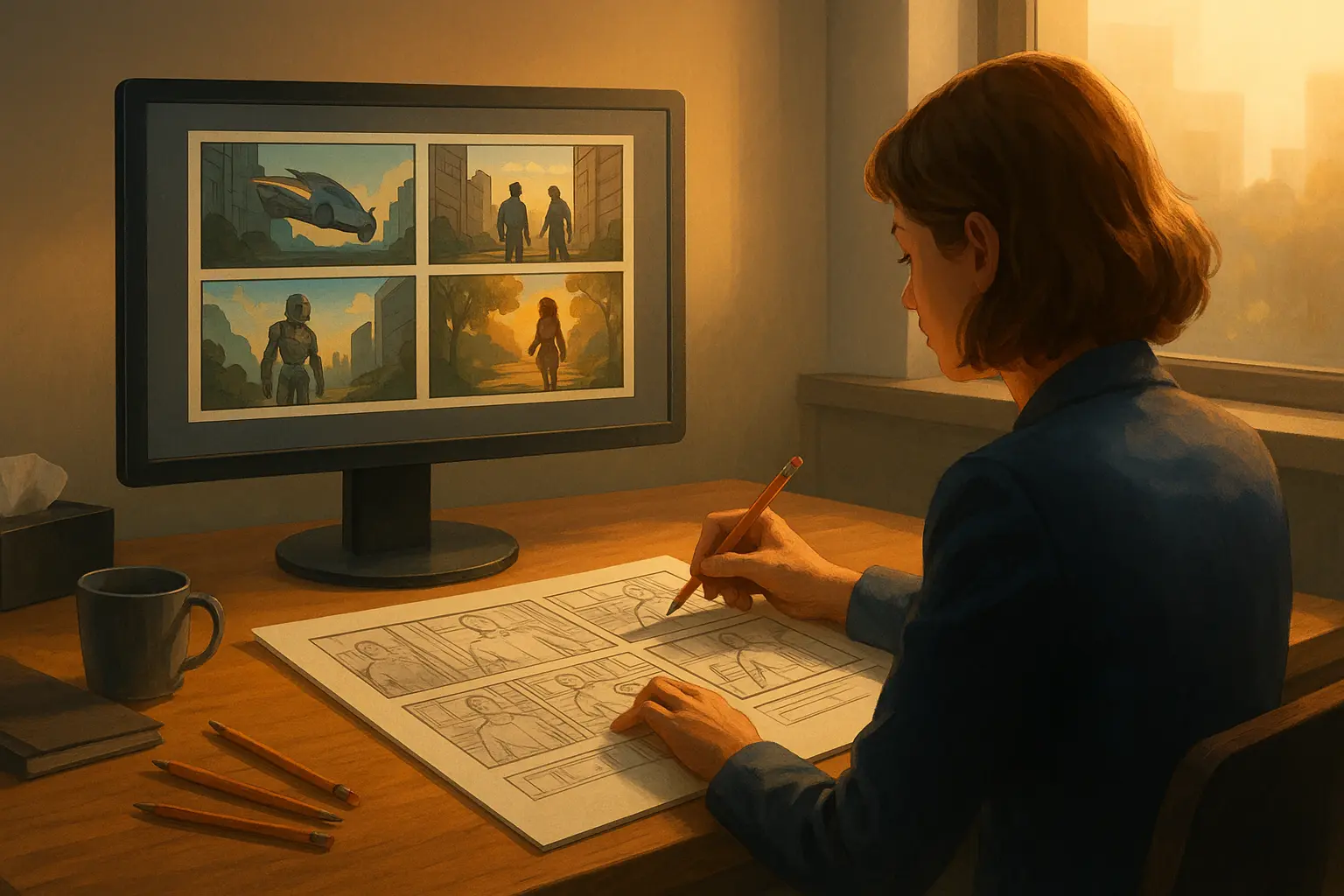
9) Sketch‑to‑Video (vom Bleistift zur Motion)
Einsatz: Art‑Education, Konzept, Pre‑viz. Trick: Komposition/Silhouetten bewahren; Licht/Material zuletzt.
Prompt:
Convert rough pencil storyboard to cinematic video:
respect original composition, inked line art as guidance,
realistic lighting and textures, controlled parallax.
10) Seamless Loops (Ende = Anfang)
Einsatz: Homepages, Store‑Screens, Lofi‑Hintergründe. Regel: Erster/letzter Frame identisch; keine harten Lichtwechsel.
Prompt:
Seamless loop: first/last frames match,
gentle parallax (waves, lanterns, snowfall),
no abrupt exposure or color shifts.
11) Watermark & Compliance‑Erklärer
Einsatz: Kundentrust & Plattform‑Konformität. Winkel: Warum Herkunft/Watermark, wo Disclosure, Briefing zu Personenrechten. Deliverable: Wiederverwendbares 60s‑Erklärvideo für Portfolio‑Posts.
12) Agentur‑Pipeline (Batch‑Varianten fürs Testing)
Einsatz: Ad‑Ops, Social‑Kalender, Creative‑Tests. Pattern: Storyboard fix; nur Licht/Style/CTA variieren; 6–12 Varianten; Hook‑Retention & CTR messen.
Prompt:
Batch variants: fixed storyboard for {product},
change one variable per version (lighting OR style OR CTA text),
export 6 variants for ad testing; consistent framing/identity.
Praktische Leitplanken
- Eine Bewegung pro Shot.
- Exposure locken.
- Typo zuerst (CTA‑Lesbarkeit).
- Konstante Farb‑Pipeline.
- Messen: Watch‑through, First‑3s, CTA‑Klicks.
Wo ausprobieren
Du brauchst kein Studio. Teste Workflows auf dieser Plattform mit sora 2, experimentiere mit 15s/25s und baue eine wiederverwendbare Storyboard‑Bibliothek.